
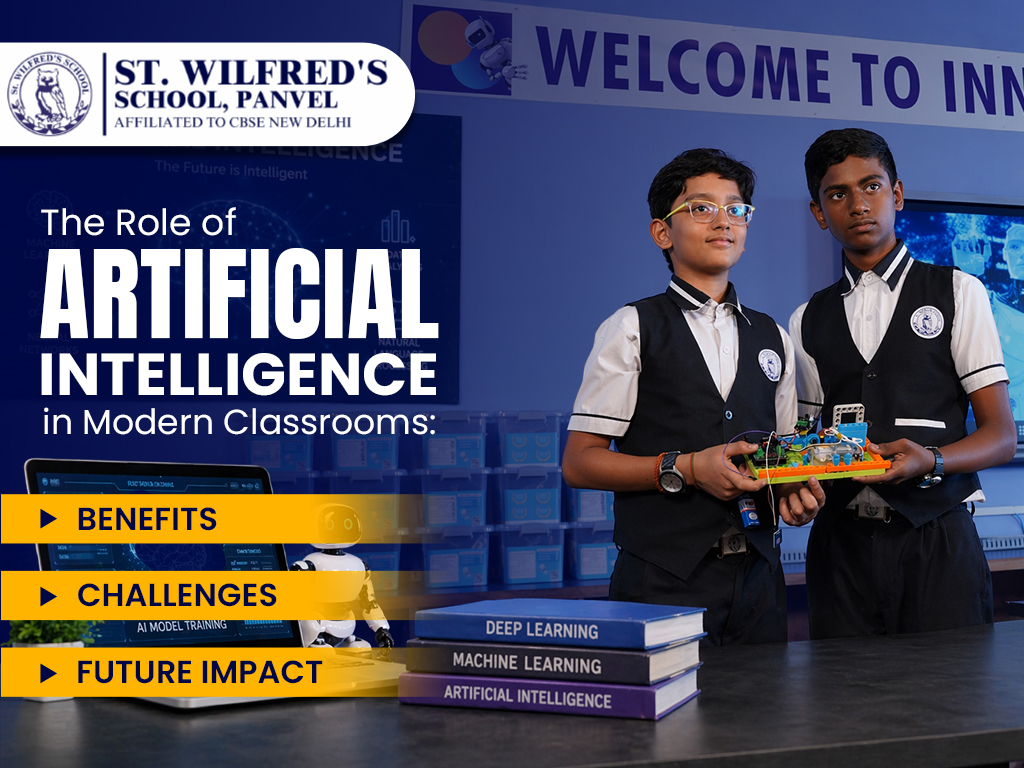
Walk into any school today, and you will notice something has quietly shifted or been improved. Textbooks are still there, teachers are still at the front of the room, but the teaching approach to students’ learning is changing fast. Artificial intelligence in education is no longer a futuristic concept reserved for tech companies or universities. It is making its way into classrooms at every level, and for good reason.
From personalised learning platforms to automated grading tools, AI in education is giving teachers more time to focus on what they do best: building real connections with students. But like any major shift, it comes with questions worth asking. What does it actually offer? What should we be cautious about? And where is it all heading?
This blog explores the role of AI in education in a grounded, honest, and useful way for parents, educators, and school leaders alike.
What Is AI in Education, Really?
Before diving into the benefits and drawbacks, it helps to understand what we are actually talking about. AI in classrooms refers to software and systems that can analyse data, adapt to individual student needs, automate repetitive tasks, and assist teachers in delivering better lessons.
Today’s schools integrate digital tools that quiz students and adjust the difficulty based on their performance, or platforms that flag when a child is falling behind or faces difficulties, so that the teacher can step in early. This is not about replacing teachers but actually about giving them better tools.
Schools with strong STEM education programmes have been among the first to explore these tools, recognising that preparing students for a technology-driven world starts with exposing them to it from an early age.
Benefits of AI in Education
1. Personalised Learning at Scale
One of the biggest advantages of AI in classrooms is the ability to personalise learning for every student. Traditional classrooms often follow the same approach for every child. AI tools can identify where a student is struggling and adjust the content accordingly, giving each child a learning path that suits their pace and style.
This mirrors the philosophy behind the benefits of experiential learning, which come from students engaging with material in ways that feel relevant and immediate to them.
2. Support for Teachers, Not a Replacement
Not only for students, but AI tools are also beneficial for teachers, helping them handle time-consuming tasks such as grading multiple-choice tests, tracking attendance patterns, and generating progress reports. This gives teachers more time to focus on every student, classroom discussion, mentorship, and creative problem-solving.
A teacher at a top school in Panvel
or anywhere else in the country can use AI-generated insights to understand class-wide trends and adjust their teaching style before a small issue becomes a big one.
3. Immediate Feedback for Students
Previously, students had to wait a week or more for feedback on their assignments, which could slow down learning. AI tools provide immediate feedback and state where they lack most, so students can correct mistakes while the information they learnt is still fresh in their minds. This kind of real-time response is particularly powerful in subjects like mathematics and languages.
4. Accessibility and Inclusion
AI teaching methods can make education more accessible for students with learning differences. Text-to-speech tools, visual learning aids, and adaptive content delivery can support children who might otherwise struggle in a conventional classroom setup.
Challenges and Disadvantages of AI in Education
1. The Risk of Over-Reliance
When students lean too much on AI for answers, critical thinking can take a back seat. There is a real concern that if AI does too much of the heavy lifting, students may not develop the problem-solving skills they need for life beyond school.
2. Data Privacy Concerns
AI systems collect a significant amount of data about students. Their performance, behaviour, patterns, and preferences. If this data is not handled carefully, it raises serious questions about student privacy and security, especially for younger children.
3. Unequal Access
Not every school has the proper infrastructure to support AI tools. The impact of artificial intelligence in education could widen the gap between well-resourced schools and those without the budget to integrate AI tools. This is a challenge that policymakers and school leaders need to take seriously.
4. The Human Element Cannot Be Replaced
Good teaching is about more than information delivery. It is about motivation, empathy, mentorship, and knowing when a student needs motivation rather than another worksheet. AI, however sophisticated, cannot replicate that human connection. This is one of the strongest arguments for using AI as a support tool rather than a central driver of education.
The Future Impact of Artificial Intelligence in Education
Looking ahead, the impact of artificial intelligence in education is likely to grow significantly. Here is what educators and parents can expect over the next decade:
- Digital tools and learning management systems that track long-term student development
- AI-assisted curriculum design that properly managed national learning goals and individual classroom needs
- Virtual tutors that provide after-school support in real time
- Better tools for identifying learning difficulties early, allowing for timely intervention
Schools that invest in teacher training around these tools will be far better positioned to use them effectively. The technology is only as good as the people using it.
For institutions focused on STEM education in schools, AI offers new ways to make complex concepts more approachable. Simulations, adaptive problem sets, and project-based tools powered by AI can bring abstract ideas to life in ways that textbooks simply cannot.
Conclusion
Artificial intelligence is not an all-time solution to every challenge in education, but it is a powerful tool when used thoughtfully. The role of AI in education is to enhance approaches, not replace them. When schools integrate AI tools with clear goals, proper training, and a commitment to student well-being, the results can be genuinely transformative.
For students, it means more personalised support which they can access 24/7. For teachers, it means less administrative burden and more time with the people who matter most. For parents, it means a school environment that is more responsive and better equipped to help every child thrive.
The classroom of the future will still have a teacher at its heart. But that teacher will have better tools than ever before.
Frequently Asked Questions (FAQs)
Q1. What is the role of AI in education?
AI in education supports personalised learning, automates administrative tasks, provides real-time student feedback, and helps teachers identify learning gaps early. It acts as a support system that enhances the overall classroom experience without replacing the teacher.
Q2. What are the main benefits of AI in education?
The key benefits include personalised learning paths for each student, immediate feedback, time savings for teachers, better inclusion tools for students with learning differences, and data-driven insights that improve teaching quality over time.
Q3. Are there disadvantages of AI in education?
Yes. The main concerns include full reliance on technology, which reduces critical thinking; student data privacy; unequal access across schools; and the risk of diminishing meaningful teacher-student interaction. These challenges need to be addressed with proper policies and training.
Q4. How is AI used in classrooms today?
AI tools are used for adaptive learning platforms, automated grading, student performance tracking, intelligent tutoring systems, and lesson plan generation. Many schools are also beginning to use AI alongside STEM education to make subjects more interactive.