
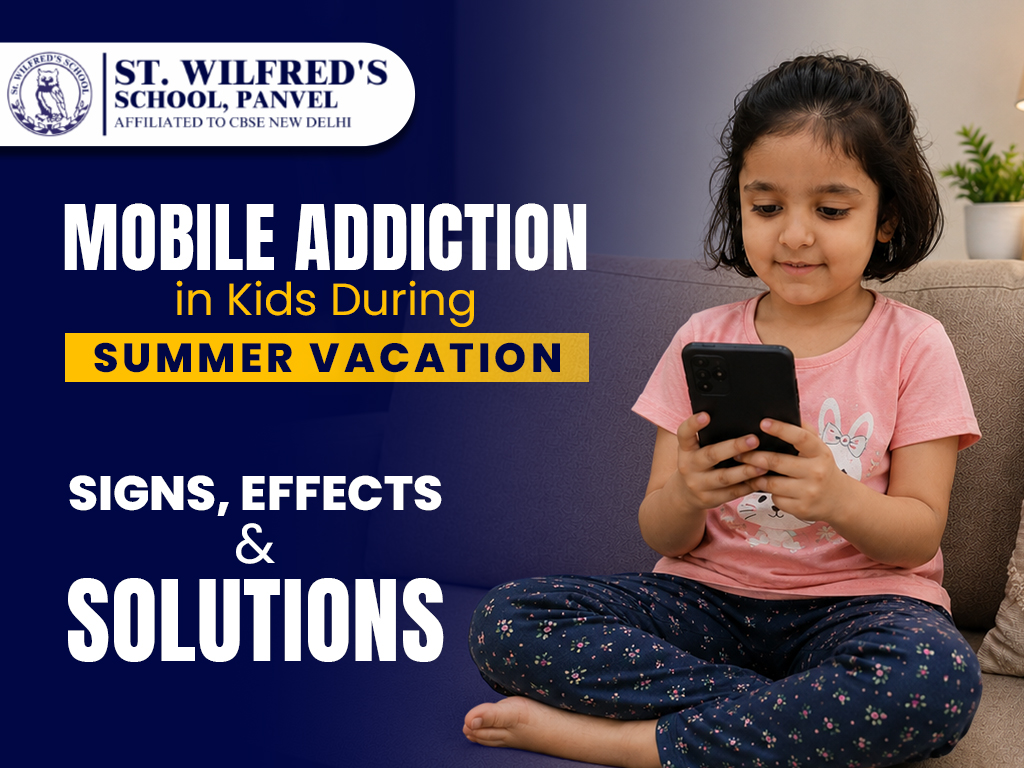
Summer vacation is supposed to be the best time of a child’s year. Children enjoyed a alot during the vacation because there was no homework, no early mornings, and no school pressure: just freedom, fun, and the chance to recharge before the next academic year began.
But recently, when we walk into most homes, we find a very different picture. Children stretched out on sofas, eyes fixed on glowing screens, barely noticing when someone walks in or calls their name. Hours pass. Meals go cold. Sleep gets pushed later and later. And parents stand by, unsure whether to fight about it or let it go.
Mobile addiction in kids during summer vacation has quietly become one of the most challenging parts of our time. And the first step to addressing it is understanding exactly what it is, what it does, and what actually works.
What Is Mobile Addiction in Kids?
Mobile addiction is not simply about using a phone too much. It is a behavioral pattern where a child becomes so dependent on their device that it begins to interfere with their physical health, emotional wellbeing, relationships, Sleep, and daily life.
Children are neurologically more vulnerable to the design of apps and games. Social media platforms, short-video apps, and online games are deliberately engineered to maximize engagement. Every notification and every auto-playing video is designed to keep users engaged and hooked.
Summer vacation amplifies this risk, and the absence of school structure removes the natural breaks that regulate screen time during the academic year. With nothing to fill the hours, the phone becomes the default answer to boredom, loneliness, and restlessness.
Signs Your Child May Have a Mobile Addiction
Recognizing the signs early gives parents the chance to intervene before the habit becomes deeply entrenched. Here is what to watch for:
Behavioural Signs
- Anger, irritability, or emotional meltdowns when the phone is taken away or restricted
- Sneaking the device at night or after being told to stop
- Lying about how much time they have spent on their phone
- Choosing screen time over meals, Sleep, outdoor play, or spending time with family
- Losing interest in hobbies and activities they previously enjoyed
Physical Signs
- Complaints of headaches, eye strain, or neck and back pain
- Improper sleep patterns, staying up late due to phone use
- Weight gain from prolonged inactivity
- Poor posture from hunching over a device for hours
Emotional and Social Signs
- Anxiety or restlessness when the phone is not accessible
- Reduced attention span and difficulty focusing on non-screen tasks
- Withdrawal from family interactions or face-to-face friendships
- Emotional dependence on online validation through likes and comments
If you notice several of these signs together, it is time to take the situation seriously.
The Real Effects of Excessive Screen Time on Children
The effects of unchecked screen time for children go far deeper than “too much TV.” Research consistently shows that prolonged, unstructured device use during the formative years can have lasting consequences.
On the Brain and Cognition: Excessive screen time rewires the developing brain to expect constant stimulation. This makes it harder for children to sit with boredom, sustain attention, or engage in slower, deeper forms of thinking, such as reading, problem-solving, or creative play. Academic performance often suffers as a direct result.
On Sleep: The blue light emitted by screens suppresses melatonin production, making it harder for children to fall asleep and stay asleep. Sleep deprivation in children is linked to mood disorders, weakened immunity, poor concentration, and slower physical development.
On Mental Health: Multiple studies have linked heavy social media use in children and adolescents to increased rates of anxiety, depression, low self-esteem, and loneliness. The comparison culture of social media is particularly harmful for children who are still forming their identities and sense of self-worth.
On Physical Health: A sedentary summer spent on screens contributes to weight gain, poor cardiovascular health, vitamin D deficiency from reduced outdoor exposure, and weakened eyesight. A childhood that should be active and exploratory gets swapped for hours of stillness.
On Social Development: Children learn empathy, conflict resolution, communication, and cooperation through real-world interactions. When screen time replaces face-to-face socializing, these critical skills develop more slowly. Many children who are heavily screen-dependent struggle with social confidence when they return to school.
Practical Solutions to Reduce Screen Time This Summer
Reducing screen time is not about punishment or constant conflict. It is about replacing the appeal of screens with something equally engaging. Children do not give up phones because they are told to; they give them up when they have better alternatives.
Create a Summer Structure Together: Work with your child to build a loose daily structure for the vacation. Not a rigid school-like timetable, but a rhythm that includes outdoor time, a creative activity, family time, and yes, some screen time too. When children are involved in planning the structure, they feel ownership over it and are far more likely to follow it.
Make Offline Summer Activities Genuinely Exciting: The most effective digital detox for kids is not restriction; it is replacement. When kids’ summer activities are genuinely engaging, children naturally choose them over screens. Think beyond generic suggestions: cooking a new recipe together, building something with their hands, starting a summer project, joining a local sports group, visiting a library, or exploring a new part of the city.
If you are looking for structured inspiration, our blog post on Best Ways to Use Summer Vacation Productively for Student offers ideas that make the off-school months genuinely meaningful.
Model the Behavior You Want to See: Children notice everything. If parents are constantly on their own phones, the message children receive is that screens are the default way to spend free time. One of the most powerful parenting tips for summer vacation is simple: put your own phone away during family meals, outings, and conversations. Children respond more to what they observe than to what they are told.
Use Parental Controls Thoughtfully: Parental control tools on phones and routers can help enforce agreed screen time limits without constant confrontation. App timers, content filters, and usage dashboards help parents stay informed and give children a consistent boundary that relies on more than willpower. Pair these tools with conversation, not just control.
Teach Digital Awareness, Not Just Digital Restriction: As children grow older, outright restriction becomes less practical. The more sustainable approach is helping children develop a conscious relationship with technology: understanding why certain apps are designed to be addictive, recognizing when they use screens out of habit rather than genuine choice, and knowing how to set their own limits.
For a deeper look at keeping children safe in digital spaces, our blog on Online Safety for Children covers what every parent should know.
Keep Bedrooms Screen-Free at Night: One of the simplest and most impactful changes a family can make is to charge all devices outside the bedroom at night. This one rule protects Sleep, reduces late-night usage, and removes the biggest source of bedtime phone use without any ongoing negotiation.
The Role of Schools and Communities
Addressing mobile addiction in kids is not a challenge for families alone. Still, currently, schools, especially those that emphasize holistic development, play a vital role in building healthy digital habits year-round.
Good schools integrate structured offline activities, encourage reading and creative expression, and educate children about responsible technology use as part of the curriculum. When looking for the right academic environment for your child, choosing a school that takes these values seriously matters more than ever. If you are exploring options, you can start by looking into a CBSE school in Panvel that prioritizes balanced development alongside academic excellence.
Communities also matter. Neighborhood play groups, sports clubs, summer camps, and public libraries all provide children with the real-world connection and engagement that screens can never truly replicate.
Final Thoughts
Mobile addiction in kids is real, and day by day, it is growing, and summer vacation is when it takes its deepest hold. But it is also entirely addressable. No child chooses screens over life when life is genuinely rich, stimulating, and connected.
This summer, the most important thing you can give your child is not a new activity or a stricter rule. It is your attention, your presence, and the example of someone who also knows how to put the phone down.
That, more than any app timer or parental control, is what makes the difference.
Frequently Asked Questions (FAQs)
What are the early signs of mobile addiction in kids?
Early signs include irritability when the phone is taken away, sneaking devices after being told to stop, loss of interest in outdoor or social activities, disrupted Sleep, and declining academic interest or attention span. If several of these appear together, it is worth proactively addressing the pattern.
Does a digital detox for kids actually work?
A structured digital detox can be very effective when done collaboratively rather than as a punishment. Replacing screen time with genuinely engaging offline activities, involving children in setting boundaries, and modeling healthy device use as a family all significantly improve outcomes.
How can working parents manage their child’s screen time during the summer?
Working parents can use parental control apps to enforce agreed limits, enrol children in structured summer programs or camps, create a loose daily schedule with the child before vacation begins, and ensure at least some daily screen-free family time.